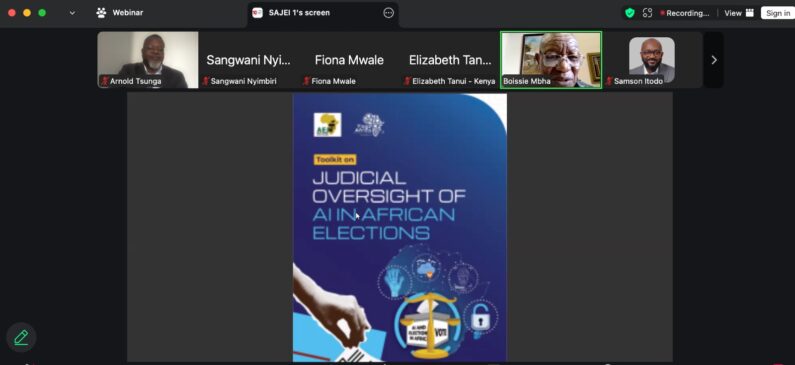
Today the AJJF in collaboration with the South Africa Judicial Education Institute (SAJEI) and the Southern and East Africa Chief Justices Forum (SEACJF under the platform of the Africa Electoral Justice Network (AEJN) with technical support from Yiaga and the Centre for Human Rights at the University of Pretoria virtually launched the Toolkit for Judicial Oversight over AI in Elections in Africa.
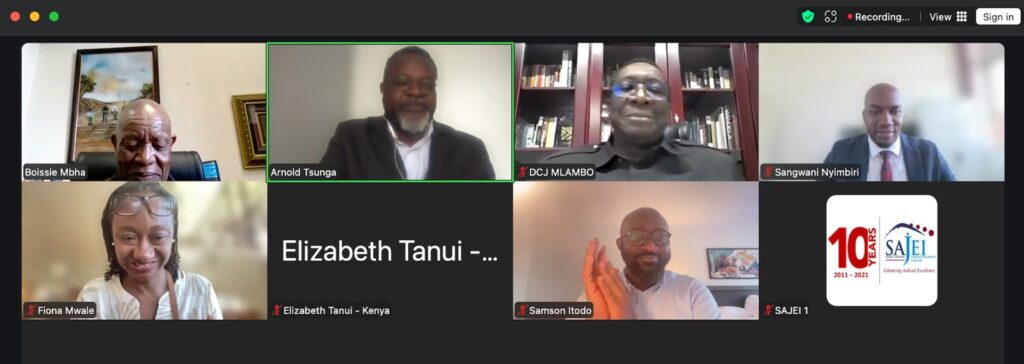
The virtual launch was attended by over 60 judges, judicial officers and electoral experts from across Africa. Notable participants included Chief Justice Mzikamanda (Malawi), Deputy Chief Justice Mlambo (South Africa), Justice Isaac Lenaola (Kenya), Justice Charles Mkandawire (Malawi), Justice Fiona Mwale (Malawi).
Deputy Chief Justice Dunstan Mlambo of South Africa gave a key note address focusing on the role of AI in African justice systems. He emphasized that AI is not replacing judges but making judges more efficient by removing some unnecessary administrative work that can be done by AI, in the process AI is creating more time for judges to focus on substantive justice. With appropriate use under human supervision, AI can help contribute to consistency in jurisprudence, enhancing transparency and access to justice.
In jurisdictions that have developed integrated electronic case management systems involving different role players in justice administration such as Rwanda and Zimbabwe, AI helps reduce delays and improves coordination and judicial accountability. DCJ Mlambo warned that judiciaries should not be passive recipients of foreign technologies in developing and adopting AI tools to help in justice administration as this may compromise judicial sovereignty. Where there is limited AI sovereignty, the justice system may potentially be subjected to algorithmic black boxes.
In response to DCJ Mlambo’s comments, Samson Itodo, the Executive Director of Yiaga, Africa posited that AI in Africa’s Elections is here to stay as use of AI in elections is growing on a daily basis. He aurgued that AI is not creating new rules but is merely being used to better implement and comply with existing election standards and laws. Ultimately AI must be employed with the clear objective of centering and protecting the vote and the voter’s rights in Africa’s elections.
Various experts comprising practicing judges, expert jurists made presentations to the audience on topics covered in the Toolkit that include legal and normative frameworks on AI in Africa Elections; evidence management in Al-related Elections; judicial remedies and reliefs in Al-Electoral disputes; simulated scenarios for judicial engagement in AI related potential election disputes.
The Chairperson of the AEJN Justice Boissie Mbha, retired Judge of the Supreme Court of Appeal, South Africa and past president of the Electoral Court of South Africa officially launched the AEJN Toolkit on Judicial Oversight of AI in African Elections.
He lamented that “flawed elections in Africa have seen an unprecedented number of electoral cases being subjected for judicial scrutiny, rendering a strong perception that the judiciary has become an electoral institution in its own right in Africa.”
Flawed elections have produced highly contested outcomes leaving some of our societies divided and prone to needless conflict and unconstitutional changes of government added Justice Mbha. Unconstitutional changes of government are manifested in part by the increase in the phenomenon of coups, some of which look popular, “even as we all know that a coup can never be a good foundation on which to build democratic societies” said Justice Mbha.
The AEJN is focused on creating safe spaces for judges, EMBs and election experts to discuss and develop their craft competence to resolve electoral disputes in a way that helps achieve the maximum possible electoral justice as judges develop Africa’s electoral jurisprudence
Justice Mbha concluded the launch speech by lamenting that “disputed elections weaken public trust in the democratic process. The public also has limited trust in a government that emerges following what is perceived as flawed elections making it difficult for the governments to focus on the development agenda.”
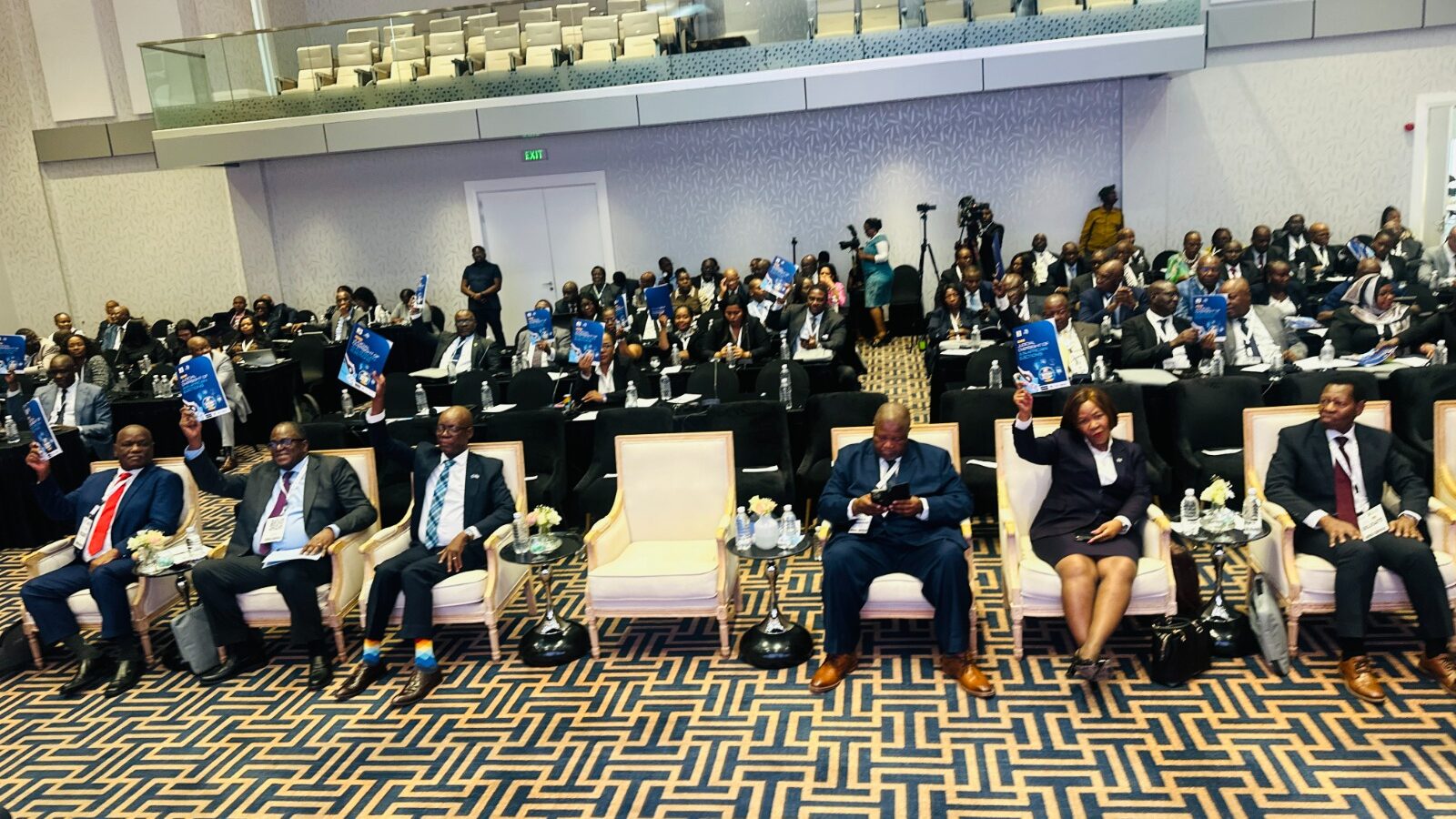
It is therefore hoped that this Toolkit will help judges and electoral experts to contribute through positive and transformative jurisprudence to the narrowing of the gap between election standards as developed and adopted by the AU and AU member states and the electoral practices of the member states. The virtual launch follows the in person launch of the Toolkit that happened at the SEACJF Annual Conference in Botswana in October 2025.