

🏛️ About the Africa Judges and Jurists Forum (AJJF)
The Africa Judges and Jurists Forum (AJJF) is a pan-African network of judges and jurists, who are committed to promoting justice and development in Africa by providing legal expertise to governments, intergovernmental organizations, donor agencies, private sector and civil society organizations. Through convening high-level judicial dialogues, providing legal expertise, and building strategic alliances, AJJF plays a unique role in strengthening the continent’s legal and institutional responses to systemic injustices.
AJJF’s work is organised around these core programmatic pillars:
- Independence of the Judiciary – Serving as AJJF’s flagship initiative to safeguard constitutional and democratic governance across Africa’s diverse legal systems.
- Access to [Reparative] Justice – Advancing the legal, normative, and institutional architecture necessary to secure justice for victims of historical and ongoing harms.
- Civic Space and Digital Rights – Explores the intersection of judicial protection and fundamental freedoms in an era of digital transformation.
- Electoral Justice – Supporting legal frameworks and dispute resolution mechanisms to ensure credible and peaceful electoral processes.
🌍 The AJJF Africa Reparations Programme
Anchored in AJJF’s broader access to [reparative] justice pillar, the Africa Reparations Programme was established to catalyse legal and policy pathways to address the enduring impact of colonialism, transatlantic enslavement, apartheid and contemporary violations.
The programme pursues this through:
- Legal Empowerment: Building the capacity of judges, lawyers, and community advocates push for reparations.
- Normative Development: Contributing to African Union processes and partnering with AU organs such as AU ECOSSOC to develop the White Paper on Reparations and other continental policy initiatives.
- Strategic Alliances: Facilitating AU–CARICOM cooperation, regional colloquia such as the African -Caribbean Dialogue on Justice through Reparations and cross-continental learning to shape a unified African reparations agenda.
- Case Development & Support: Identifying and supporting litigation and advocacy strategies for communities seeking justice.
In alignment with the African Union’s 2025 theme on reparations, AJJF’s Africa Reparations Programme continues to build coalitions, advocate for reparations frameworks, and centre the voices of those most affected by historical and systemic harm.
⚖️ Why This Convening Matters
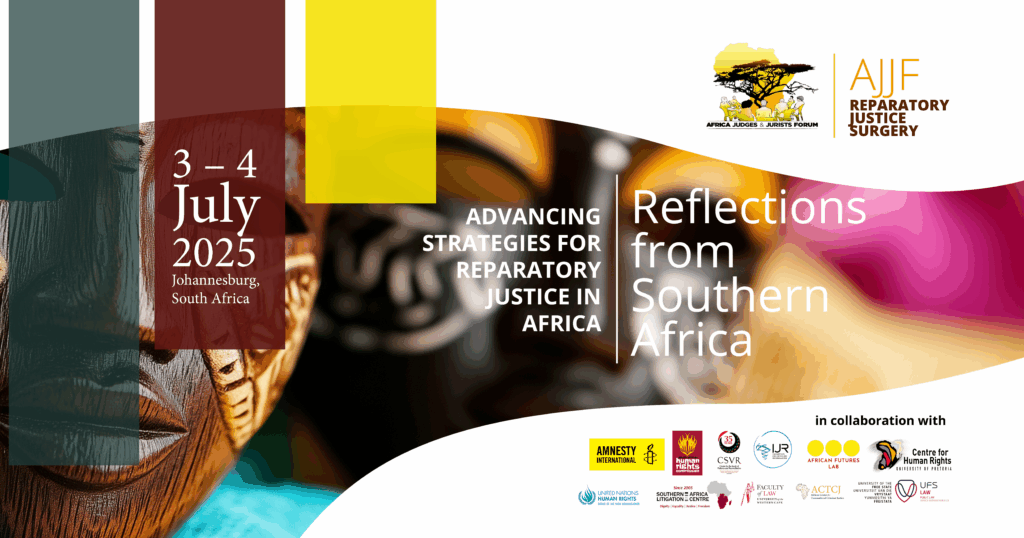
The AJJF Reparatory Justice Surgery is more than a workshop; it is a legal and advocacy laboratory where actors across the spectrum of law, civil society, academia, and affected communities gather to diagnose complex historical injustices and co-create innovative responses. From colonial violence, enslavement, and apartheid, to contemporary systemic exclusions and cultural erasure, the harms inflicted on African people demand deliberate, sustained, and legally-grounded reparative action.
This inaugural edition, focused on Southern Africa, is a strategic intervention designed to:
- Equip legal and community actors with the tools and knowledge to frame and pursue reparations using existing domestic, regional, and international mechanisms.
- Center the voices and agency of affected communities, moving away from top-down models of justice to co-creative solutions.
- Strengthen the reparatory ecosystem by convening cross-sectoral partners to align legal, advocacy, and community-based strategies.
🧩 About the Event
The AJJF Reparatory Justice Surgery adopts a problem-solving, hands-on format, inspired by the concept of a medical “surgery” where participants collaboratively diagnose legal and structural barriers to reparations and strategise practical solutions.
Key Features of the Surgery Format:
- Interactive Problem-Solving Sessions: Participants engage in structured exercises and scenario-based discussions to tackle real-world reparations challenges.
- Multi-Stakeholder Dialogue: The Surgery brings together lawyers, activists, academics, policy makers, and directly affected communities.
- Case-Centered Learning: Real or emerging cases of reparatory injustice are dissected for legal strategy development, advocacy planning, and international collaboration.
Strategic Objectives:
- Identification of 1–2 viable reparations cases for strategic litigation, international advocacy, or policy mobilisation.
- Capacity strengthening of community advocates and legal practitioners to engage effectively in reparatory justice processes.
- Development of advocacy roadmaps to amplify campaigns at regional and global levels, ensuring sustained momentum beyond the convening.





![actcj logo-[48]](https://africajurists.org/wp-content/uploads/2025/06/actcj-logo-48-300x129.png)
![OHCHR_Logo_EN_blue_LARGE_300dpi[61]](https://africajurists.org/wp-content/uploads/2025/06/OHCHR_Logo_EN_blue_LARGE_300dpi61-300x138.png)

🤝 Our Partners for the Southern Africa Edition
The Southern Africa edition of the Reparatory Justice Surgery is made possible through the collaboration and expertise of leading institutions and advocates across the region. We proudly acknowledge the invaluable support of our partners who share our vision for a just and reparative future:
Explore the list of our partners
They include:
- African Futures Lab (AfaLAB)
- Africa Reparations Hub, University of the Free State (SA)
- African Centre for Criminal and Transitional Justice, University of the Western Cape (SA)
- Amnesty International, Southern Africa
- Centre for Human Rights, University of Pretoria (SA)
- Centre for the Study of Violence and Reconciliation (CSVR)
- Institute for Justice and Reconciliation (IJR)
- South African Human Rights Commission (SAHRC)
- Southern Africa Litigation Centre (SALC)
- United Nations Office of the High Commissioner for Human Rights – Regional Office for Southern Africa (OHCHR, ROSA)
These partners bring deep experience in advocacy, legal expertise, transitional justice, and community engagement. Together, we are forging a robust platform to advance reparatory justice across the continent.
Acknowledging Our Historic Strategic Partnerships
This convening builds on AJJF’s sustained partnerships with key stakeholders across Africa and beyond. Over the past years, we have co-created platforms, shaped policy conversations, and supported advocacy efforts that have helped define the reparatory justice ecosystem on the continent. Some of the key organisations we have collaborated with over the years include: Minority Rights Group International (MRG); Pan African Lawyers Union (PALU); Reform Initiative (RI); African Union Economic, Social and Cultural Council (AU ECOSOCC); African Commission on Human and Peoples’ Rights (ACHPR); African Court on Human and Peoples’ Rights (ACtHPR); Other AU organs, research centres, and grassroots civil society actors.
These relationships have helped us support and amplify the ecosystem needed to sustain reparatory justice work in Africa and beyond. We remain committed to deepening these partnerships as we expand the Reparatory Justice Surgery model across West, East, Central, and North Africa.
Looking Ahead: A Flagship Vision
The AJJF Reparatory Justice Surgery is envisioned as one of the flagship initiatives of the Africa Reparations Programme at AJJF. By convening cross-sectoral actors in legal, academic, advocacy, and community spaces, we hope to sow the seeds for coordinated, legally-grounded, community-rooted reparations movements across the continent. This Southern African edition is a pilot to draw lessons that could help tease us practical strategies for advancing reparatory justice in Africa.
For more information please contact:
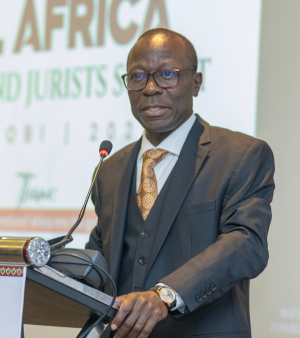
Martin Okumu-Masiga
Secretary General
Africa Judges & Jurists Forum (AJJF)
Email: okumu-masiga@africajurists.org
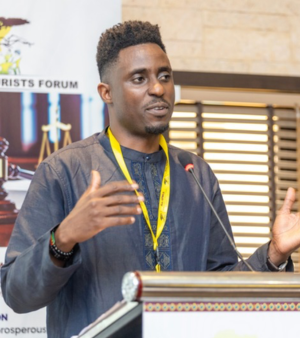
Dr. Justice Alfred Mavedzenge
Programs Director
Africa Judges & Jurists Forum (AJJF)
Email: justice-mavedzenge@africajurists.org

Henrietta M. Ekefre (Ms/She/Her)
Legal Advisor, Africa Reparations Program
Africa Judges & Jurists Forum (AJJF)
Email: henrietta.ekefre@africajurists.org